 Girl's Behavior
  Guy's Behavior
  Flirting
  Dating
  Relationships
  Fashion & Beauty
  Health & Fitness
  Marriage & Weddings
  Shopping & Gifts
  Technology & Internet
  Break Up & Divorce
  Education & Career
  Entertainment & Arts
  Family & Friends
  Food & Beverage
  Hobbies & Leisure
  Other
Other  Religion & Spirituality
  Society & Politics
  Sports
  Travel
  Trending & News

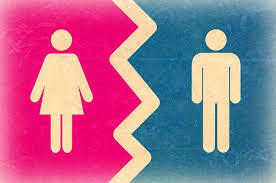
As a man attracted to women, I’ve reached a point where I no longer see the value in pursuing romantic relationships. In my opinion, modern feminism in the post-#MeToo era has profoundly damaged the dating landscape. What was once a space for mutual connection now feels like a minefield of distrust, hostility, and impossible expectations. Several cultural shifts, from skyrocketing divorce rates to the “believe all women” mantra, extreme rhetoric like “all men must die,” viral videos vilifying normal male behavior, and the pervasive “I don’t need no man” attitude, have left me feeling that merely existing as a man brands me as toxic, dangerous, or unworthy. Since around 2005, I’ve increasingly heard that my very identity as a man is problematic. So why should I even try?
Let’s start with divorce rates. In the US, around 40 to 50 percent of marriages end in divorce, with women initiating roughly 70 percent of them, according to a 2015 study from the American Sociological Association (Rosenfeld, 2015). The financial and emotional toll of divorce is staggering, alimony, child support, and the loss of stability make the stakes feel astronomical. Modern feminism often frames marriage as a raw deal for women, encouraging independence over partnership (Regnerus, 2017). But for men, this translates to a system where commitment feels like signing up for a coin toss with devastating consequences if it lands on tails. Why enter a game that feels rigged from the start?
Then there’s the “believe all women” movement, which gained traction during #MeToo in 2017. While it aimed to amplify survivors’ voices, it’s morphed into a cultural default where accusations, true or not, carry immediate weight, often without due process (Bazelon, 2018). A single claim can ruin a man’s reputation, career, or relationships. The fear of being falsely accused, even in casual interactions, looms large. How can I approach someone romantically when a misstep, a misunderstanding, or even a glance could be weaponized against me?
This fear isn’t abstract. In 2023, a viral video surfaced on platforms like TikTok where a woman called a man at the gym “feral” for looking at her while she worked out (no specific citation due to the transient nature of social media, but widely discussed online). A glance, something humans naturally do, was spun into a narrative of predation. Social media amplified it, with comments piling on about how men are inherently creepy or dangerous. This kind of rhetoric isn’t rare; it’s become a pattern. The phrase “all men must die” or its softer cousins like “men are trash” aren’t just internet memes, they’re mainstream sentiments in some circles, visible on platforms like Twitter since the mid-2010s (Hess, 2016). When I’m told my existence is a problem, it’s hard to feel motivated to put myself out there.
On top of that, modern feminism often celebrates the idea that women don’t need men. The “I don’t need no man” attitude is everywhere, in songs like Beyoncé’s “Single Ladies” (2008), social media, and pop culture. It’s empowering for some, sure, but it also creates a dynamic where men feel devalued, like we’re optional at best, disposable at worst. In 2024, a viral social media trend saw women joking about choosing a bear over a man in hypothetical scenarios, implying even a wild animal is safer than me (no specific citation due to social media’s ephemerality, but widely reported in outlets like The Guardian). It’s not just a joke, it’s a cultural signal that men are inherently untrustworthy. When I’m constantly told I’m toxic or dangerous just for being a man, it erodes any desire to engage.
Since around 2005, this messaging has only intensified. I’ve watched as cultural narratives shifted from celebrating mutual respect to framing men as the default oppressors. The term “toxic masculinity” gained traction in academic and popular discourse, often so broadly applied that it feels like any masculine trait, confidence, assertiveness, even stoicism, is a sin (Harrington, 2021). I’m not saying there aren’t bad actors out there; there are, and they should face consequences. But when the default assumption is that I’m a threat, why should I risk my emotional or financial well-being to pursue a relationship?
Dating used to feel like a mutual adventure, a chance to connect and build something together. Now it feels like navigating a battlefield where I’m presumed guilty before I even open my mouth. The cultural shifts driven by modern feminism, amplified by #MeToo’s aftermath, have made the cost-benefit analysis of dating clear to me: the risks outweigh the rewards. I’m attracted to women, but the constant messaging that I’m inherently flawed, combined with the very real threats of social or legal repercussions, has led me to a simple conclusion: I don’t care to try anymore.































Most Helpful Opinions