 Girl's Behavior
  Guy's Behavior
  Flirting
  Dating
  Relationships
  Fashion & Beauty
  Health & Fitness
  Marriage & Weddings
  Shopping & Gifts
  Technology & Internet
  Break Up & Divorce
  Education & Career
  Entertainment & Arts
  Family & Friends
  Food & Beverage
  Hobbies & Leisure
  Other
Other  Religion & Spirituality
  Society & Politics
  Sports
  Travel
  Trending & News


The fertility rate of a country or region is defined as the number of children an average woman has during her lifetime.
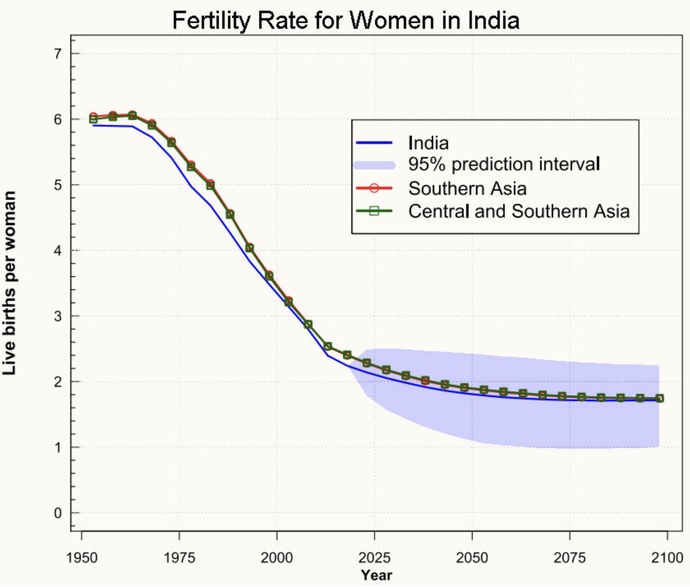
A fertility rate of around 2 is needed to maintain a stable population, essentially that replaces the mother and father; when they die, their children replce them. A rate more than 2 generally increases the population, and a rate less than 2 causes the population to decline.
The average global fertility rate is now about 2.3. Modern countries (shown in blue in the map) have fertility rates less than 2, which means their native populations will decline over time; immigration is needed to maintain (or increase) population. Third World countries (shown in brown in the map, especially Africa) have rates above 2, and their native populations are increasing.
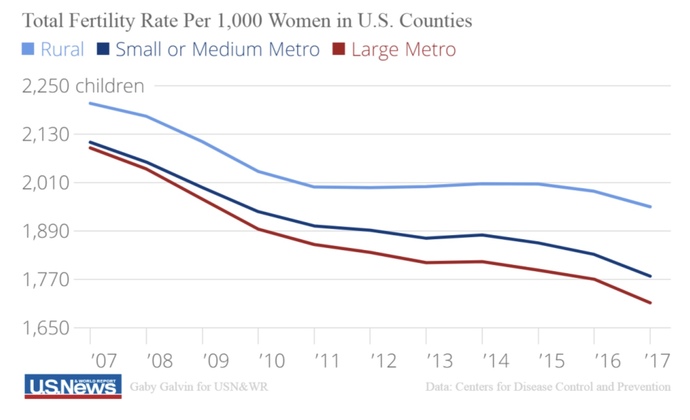
Prior to the 1950s, almost every country had fertility rates well above 2. Since then, fertility rates have dropped rapidly in many countries. Many demographers postulate that the entry of women into the workforce (which started during WW II), and the rise of feminism, is a key factor in the decline in fertility rates. More women than ever in human history now have careers, which makes it difficult to have children. A career woman may decide to have no children, or maybe only one child, since it's so hard to balance raising a child with a career. Cost of living is also high, making it difficult for a couple to survive on just one income.
What do you think? Has feminism been a major cause in the decline of fertility rates in the world? Please vote in the poll and provide a comment/opinion if you wish.