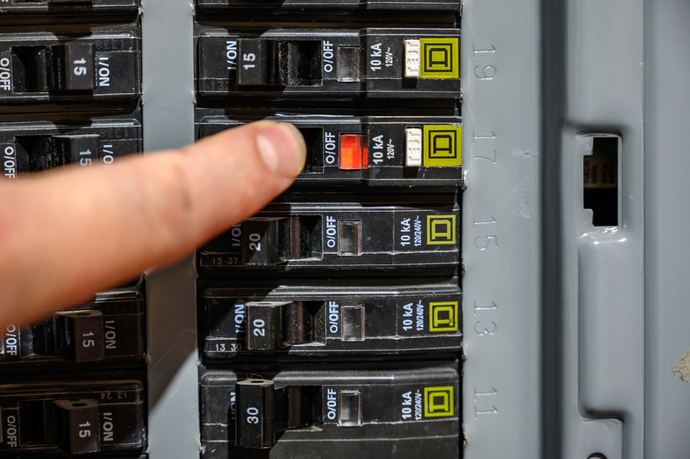
This morning, while making breakfast, one of the circuit breakers that feeds our kitchen tripped. I was using three appliances at the time (coffee maker, toaster oven, microwave), which I've done several times before, when the circuit breaker tripped. I went to the electric panel, located the tripped breaker, reset it, and went back to making breakfast, making sure not all three appliances were on at the same time. That's the first time this breaker has tripped since we remodeled the kitchen 6 years ago.
Today's question is...
How Often does a Circuit Breaker Trip in Your Home?
Do you know where your electric panel is, how to recognize a tripped breaker and how to reset it?
And if it happens again, are you aware that it would be worth getting an electrician to check the wiring to make sure there are no wiring errors or shorts?
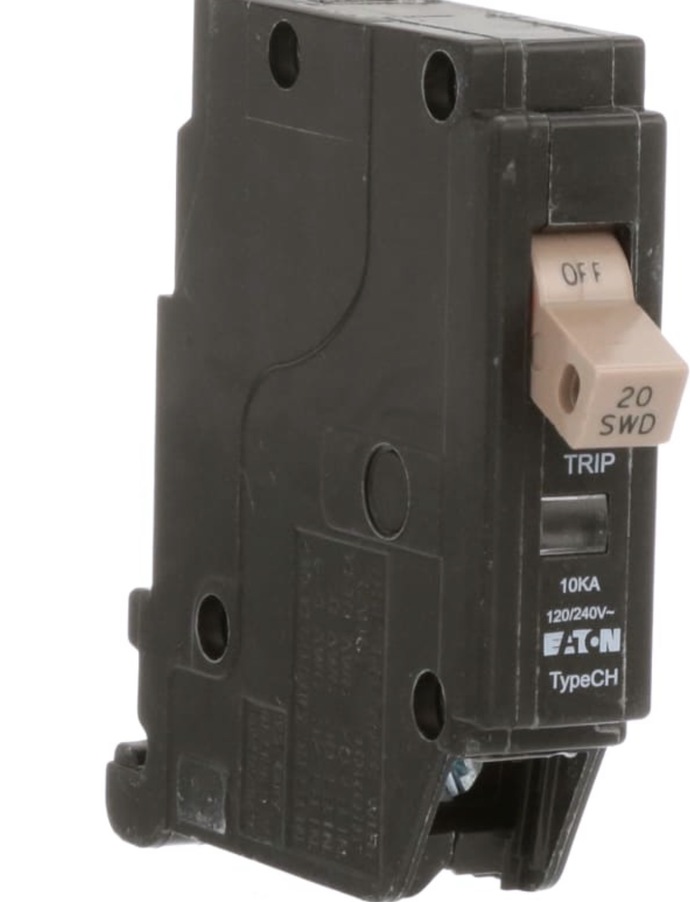
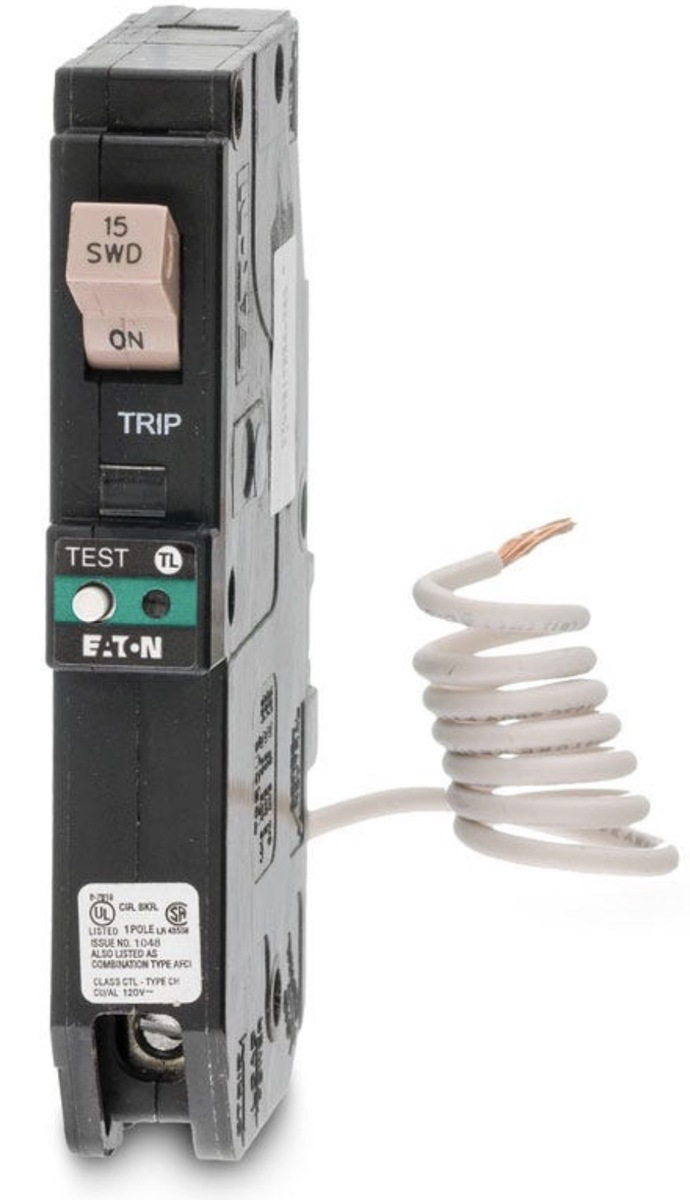
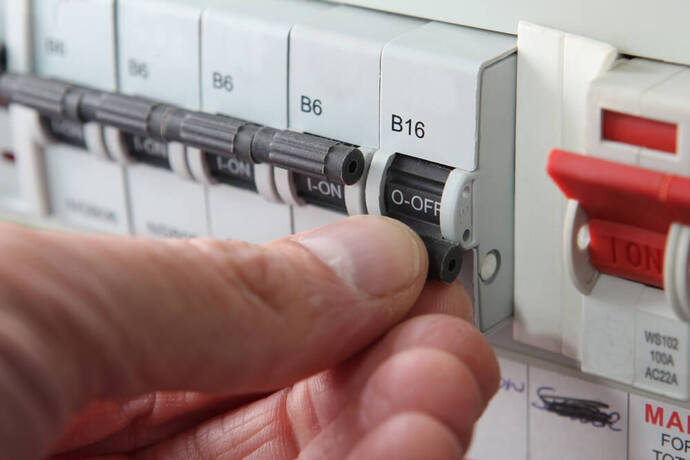
Note: The above picture shows typical circuit breakers in the United States and Canada, where 120 volts is the common voltage. In other countries, especially those where 230 volts is used, the circuit breakers may look different, like the picture below.
Girl's Behavior
Guy's Behavior
Flirting
Dating
Relationships
Fashion & Beauty
Health & Fitness
Marriage & Weddings
Shopping & Gifts
Technology & Internet
Break Up & Divorce
Education & Career
Entertainment & Arts
Family & Friends
Food & Beverage
Hobbies & Leisure
Other
Religion & Spirituality
Society & Politics
Sports
Travel
Trending & News
What Girls & Guys Said
Opinion
23Opinion
A breaker is a safety switch in your electrical panel that automatically flips off to stop the flow of electricity when a circuit becomes overloaded or experiences a fault.
As for my house it’s a newer one & code requires ARC Fault Circuit Interrupter Breakers
Kitchens and laundry areas
Living rooms, family rooms, and dens
Bedrooms
Dining rooms and parlors
Hallways and closets
Recreation rooms, sunrooms, libraries, and parlors
Unfortunate before installing a whole house surge protector I did experience tripped ARC Fault breakers when my development lost power & the second the power was restored the breakers detect an arc, tripped & I have to reset them. In addition if there is a lightning strike near by the ARC Fault breakers like to trip & I have to reset them & when I turn them back on lights on the breakers flash with a trip code telling me what went wrong.
As for your tripped breaker you overloaded the circuit when all three were in use.
A microwave uses 8 to 13 amps
A toaster oven uses 10 to 15 amps
A coffee maker 5 to 12.5 amps
You have 240V in your home. Many larger electric appliances utilize 240V; electric stoves and dryers, for example. The breaker will look like a “doubled up” breaker, or it can utilize two single pole breakers with a handle tie.
Some of your kitchen appliances are required under the NFPA codes to have their own circuits; your refrigerator and oven, for example. While it’s not a requirement, it’s a good idea for the microwave to have its own circuit, and there be at least two different circuits available at your countertop and/or island. This will help to prevent nuisance tripping when you have a lot going on in the kitchen.
Finally, if the same breaker trips again in the near future, replace it. Depending upon the age of the device, the more a breaker trips, the more likely it is to trip. It’s not a terribly expensive replacement to avoid nuisance tripping.
If you’re fairly intelligent and handy, you can swap the breaker yourself. Otherwise, hire an electrician. Electricity is brutally unforgiving of mistakes.
It was often with the original wiring in the house but I rewired the house and brought it up to code when I renovated so wI have 5 split receptacles in the kitchen now. Split receptacles are not commonly used in the USA you instead use a 20 amp line with a 20 amp rated T-slot receptacle, which works but not as good as a split receptacle as on a split receptacle you have a separate circuit on the top and bottom outlets of the split receptacle. both circuits use a common neutral which is fine as the neutral only carries the unbalanced load difference. So if you're using a1200 watt toaster on the top outlet and a 1000 watt kettle on the bottom outlet of the split receptacle the neutral is only carrying 200 watts.


@LiamS95 I trust your split outlets are wired properly, with each outlet's hot leg (black wire) wired to opposite phases of the 120/240 V coming into your house. In that case, the common neutral is acceptable per code. However, if both of the split outlets are wired to the same phase, that's unsafe and violates code, because all of the return current from both outlets are in phase and may exceed the wire's rating.
Since most wiring using 3 conductor ROMEX (hot/neutral/ground), there's really no reason to use a common neutral on a split outlet. It doesn't save anything and could potentially cause problems.
Yes, a two pole breaker is used to ensure they are on different phases. and the receptacle is wired with a three conductor (black, red and white) cable plus ground.
Unless there’s a major fault, the neutral will never carry wattage. All available voltage is utilized at the load. The neutral only carries unused current back to ground. There is no voltage. Therefore there is no power.
Not often. There's one outlet in our kitchen that if you have, for example, the toaster and the coffee grinder plugged in and running at the same time, it trips it. We'll be rewiring the house within the next year, so hopefully that'll fix it.
That has happened to me 2 times in one year. All of my electricity went off!
I went to the circuit breaker box and just flipped all of them back and forth.
But when it happened again so soon we found out that it was the big main circuit breaker box for the entire apartment building. 🙄
I have a separate breaker for my shed. It is a actually the circuit that powered the swimming pool filter. When I got rid of the pool I extended the circuit to the shed. That circuit has a GFCI breaker which is appropriate for a pool filter. However it does trip a couple of times a year
If it’s no longer serving a pool, you can replace it with a regular breaker. GFCIs trip for different reasons and at a faster speed than regular breakers because the design is for personnel safety rather than equipment and circuit protection. You will likely end nuisance tripping by replacing the breaker. If that doesn’t solve the problem, you will want to hire an electrician to troubleshoot that circuit.
@Chazmatazz269 yes, I know but I am too lazy to do that.
It’s been quite a while since a breaker tripped and needed reset. We did have a faulty GFCI outlet that kept tripping but we replaced the outlet and it’s been fine since.
I know where the panels are.
I've had circuit breakers trip a few times when the sump pump in my backyard wasn't working properly. I knew what it was just from the sound of it and dealt with it immediately. I've not had a circuit breaker controlling a circuit inside the house trip in a very long time, but if that happens I definitely am going to be inspecting it and resetting it. If it trip the second time that I couldn't find the problem, but of course that would be time to call and electrician.
Most outlets are on 20 amps. If you have, say, two 30 amp appliances going the breaker should shut off the power. Also, several outlets could be on the same circuit so using two different outlets won't solve the problem. You would need bigger breakers in place, which is not always the best idea.
Is it a 15 or 20 amp breaker
The breaker just might be wearing out
See what amperage is running each of the appliances you were using and see what the rating is
That way you can check and see if your microwave could be wearing out or your toaster oven but your breaker it should be able to run all three of those
And the receptacles usually run in series you could have had something else plugged in like your refrigerator too on the same circuit
A lot of times you receptacles are looped one to the other to the other
Although Thais have built the home I live in, I am still alive.
Trips - perhaps twice in a year due to near enough lightning strikes.
I can't imagine anyone (incl. Thais) who does NOT know where the panel is.
And after these ceramic monsters have disappeared in homes, only a moron would be unable to re-set one. No matter if it says ''off'' or ''ปิด''
Don't know about Africa, though.
Never. But I don't have any GFCIs or AFCIs either. I had one GFCI outlet trip from a faulty bench grinder though.
These new AFGCI breakers are an absolute nightmare in homes though. Good in principle but poor in practice.
That hasn't happened in a long time. When I accidently swept my desk lamp onto the ground, the circuit breaker tripped on the impact.
I can't remember the last time. I heard the most common item to trip it in the UK is the electric kettle.
Very seldom. Sometimes I'll have to take down a circuit to fix something.
Once, when our daughters had a hot tub party for their friends, the hot tub heater, the fridge, multiple hair dryers and the microwave were all on simultaneously, and blew the MAIN breaker. Had to shut everything down, wait a few minutes and start up again.
I moved into my current home one year ago. I have not had any breakers trip during that time.
Circuit breaker, never. Residual-current device (RCD) sometimes for garden sockets.
We have a kitchen circuit with both a microwave and a toaster oven plugged in. Both draw about a 1000 watts on a 15 amp circuit. A 1000 watts is 10 amps, so if we start both sometimes the breaker trips. We try not to do that.
Your math is incorrect. Power (watts) = voltage x current (amps).
If you’re in the US, you are most likely operating those appliances on 120V.
1000/120=8.333. You could hire an electrician to verify the gauge of wire used in the circuit. If it’s appropriately sized, you can upgrade to a 20A breaker and end those nuisance trips.
Never? I do not remember even one tripping in my lifetime.
The dryer was tripping a breaker every few weeks earlier in the year. No problem since replacing it.
We had a toaster that would trigger it. We replaced the toaster with a new one, and it hasn't happened since.
Never, but at work it did everytime we tried to use the microwave
Im an electrician so not often, unless my wife is doing something stupid
They wear out. They're cheep at home depot.
@AviatorTom Breakers need a “Break”
@AviatorTom Rarely, to never
Not in many many years
Almost never
Not often
Not very often.