For future wealth like retirement or health emergencies - I would invest in real estate or reliable stocks or funds and not just blatantly leave cash in the bank to collect interest since it doesn't collect that much beyond the rate of inflation and neither would I entrust the government to care for me cause I hear a large number of seniors get treated like animals when they go to retirement homes due to underfunded governments not being able to give them high quality care but I do try to be conservative with my spending - I have only had to borrow money 4 times in the last 14 years and I used balance transfers instead of not paying my full credit card debt so according to my credit card I have not borrowed money in over 10 years
The Bible has many passages about being prudent in your expenses, saving a little at a time on a consistent basis, avoiding "get rich quick" schemes, maintaining a "cushion" of supplies and money, ie., a "rainy day" fund.
We own our house, a car each, all paid for. No CC debt that we can't pay off each month. We put our kids through college with no debt, each got a car and 5K to start life, and we never earned over $49,000 a year. Now we are working on retirement with a few stocks, a couple of 3.1% CDs, an old IRA, and a new SEP.
Is it just recently that you started to invest heavy? Also the money spent for a car, college and house did that money go into a savings account first to obtain that stuff?
I don't invest heavily, just continuously. But I had some small positions from the 1980s and 90's. Some of my stock came from where I worked way back in corporate days. We each came into our marriage with about $10K, living in an apartment first 2 years, 20% down on a $58,000K house and with lots of sweat equity. We would keep accumulating $ and rolling them into into higher and higher yields as our balance went up. But that was in the days when they actually paid some interest! Then we would get a car at 0% financing, etc. Lot's of ways to accumulate cash on hand, or to avoid spending it in the first place. . Got a good boost in the late 70's early 80's with interest at 15-20%! Did most of the remodeling ourselves on our first house, a fair amount on our second too.
My big regret was holding onto AOL too long- I should have sold it and bought Amazon! but, we can't win them all.
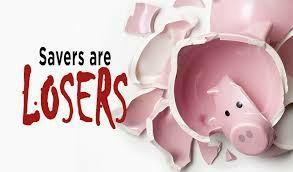
I wish savings account still payed a decent intrest, now your lucky for even a 1% apy. The quote by Robert kiyosaki "savers are losers" is pretty much saying if you just save money and don't invest your losing money. If you don't invest heavy and just save your leaving money on the table but that's good everything worked out for you.
Yeah man, total losers. Spend whatever you make. Live your life big every day. Don't save a penny and then enjoy living on your parent's couch when you're 35.
You know who else are losers? People who eat healthy, workout regularly, get regular check-ups, don't smoke and drink in moderation. Total freaking losers.
About your question "Define spending money the right way, please" The right way is spend money on assets not liabilities. I would have answered your questions on the other dudes post but he blocked me right after his comment for some reason 🤷♂️
Ni problem. But assets is so vague of a term, it could mean anything. What do you mean by assets, a car, a house, a nice suit, artwork, furniture, a high end computer? It could mean anything.
And candidly, you don't spend money on liabilities. You create liabilities when you spend money to purchase assets. When you buy an asset, unless you pay for it on the spot fully in cash, a liability is created and it continues until you fully pay it off. So what exactly do you mean?
A car is not an asset it is a liability whether you pay for it in whole or not. Through time it depreciates in value same with a suit, furniture and computer. Sell it and you will get less for it then what you bought it for. Art could be a investment but it is speculation that it will appreciate in value.
An asset is something that makes you money and appreciates in value year after year. Things like stocks, real estate etc. are assets. Depending on what you spend money on could make you more money and have exponential growth over time.
I think you have a significant lack of understanding about how the financial terms you use are generally used by everyone else. A saver doesn't mean someone who only saves cash stuffed in their mattress. A saver simply means someone who doesn't spend everything they make and saves a portion of their paycheck. They can save it and/or invest it in a variety of ways including stocks, bonds and mutual funds among many other ways. So to say savers are losers is completely inaccurate.
You also don't seem to understand what assets and liabilities are. An asset is anything you own that has a cash value. So a car is in fact an asset. That it depreciates year after year simply means the value of your asset decreases, it doesn't mean it's not an asset. If you still owe money on it, that also creates a liability. But what you owe is a liability, the loan so to speak. The item itself is never a liability. The debt is the liability. Read the financial statements and balance sheets in a company's annual report to better understand what I am saying.
What you are defining as an asset "something that makes you money and appreciates in value year after year." is in fact an investment. And the only true investment that does that is an interest bearing savings account or a money market fund that pays interest. Every other investment including the things you mentioned like stocks and real estate fluctuate and can go up or down in any given year. Nothing is guaranteed to make you money and appreciate in value year after year. NOTHING. You hope that over time your investments increase but you cannot expect them to go up consistently every year.
I'm telling you all this to try to educate you and be helpful because you seem to be confused about a lot of these things. That may account for some of the answers you got which you interpreted as the responder having no financial literacy when in fact you were not understanding what the terms you were using actually meant.
The quote by Robert kiyosaki "savers are losers" isn't really meant to attack someone's character but to bring awareness to your finances like savings accounts. Past a couple months expenses in your savings for an emergency fund your Losing money by letting it sit there. If your saving for let's say a house you could still put that money into investments then just pull it near the date you plan to buy.
Technically yes you are right a car is an asset but it still generates a various expenses and liabilities like insurance, gas, maintenance.
In the good old days yes savings account would give you a decent return. Now your lucky if you even get more then 1% on a high yeild savings account or money market account. That 1% doesn't even keep up with the average 3% inflation every year. Yes the stock market and real estate is volatile but on average the market gives about a yearly 10% return. Bull markets tend to last much longer then bear markets. If it falls to a bear market just hold and buy or diversify with bonds, reits etc. "Cash is trash"
Let's try again. People use the term savings and the act of being a saver to connote that they didn't spend a certain part of their income. A saver can invest the money anywhere. It does not automatically imply it was put in a "savings" account. I don't disagree with only holding a few months worth of expenses in a savings account and investing the rest in a variety of stock, bond or mutual funds but you're not using the terms as they are generally used.
And a car is an asset, not technically an asset. It is an asset in the standard accounting use of the term and its operation does generate expenses but those are not liabilities. A liability is a debt, money you owe that you've borrowed or have been advanced to you. Please learn what all these terms mean and how to use them properly before suggesting anyone else lacks financial literacy.
You make investing sound so easy. 10% every year and if a bear market "just" do this or that. I've been an active investor for over 20 years. Trust me, once you've been through an extended bear market, all of these decisions won't seem so easy to you.
🤔 mutual funds are actively managed funds, how would there not be? You could see the fee's on Vanguard what broker has no fee's on mutual funds? I would like to know.
I would hope they know cus over time they'll see the fees accumulate much higher then passive funds. Unless they know something no body else knows, in that case winning!
A non-zero savings rate is incredibly important in the economy and a very rational decision, given a few assumptions. That said, long-term consumption also tends to be full of behavioral biases that leads to inefficient consumption.
I love Lifesavers LOL... I think savers are very important in life so you can have a back up plan. And In case you get in trouble you have some emergency funds waiting for you
With interest rates at or close to zero there is really no incentive to save. Your savings will simply be eroded by inflation. Use your fiat currency to buy assets that have real-world value,
@That1tallguy, just saw your update, you need to save initially or over a period of time to do something with it to either invest or to start a business etc. Saving is only a loss if you're leaving all of it sitting there for emergencies (one needs to put some for it no doubt but never put all eggs in one basket).
Depends what investment one is looking for. For eg, to start a business, chances are one will have to save a lot and over a longer period. For stocks and all that no. If one wants to buy a house then it will take long. The key for me at least is moderation.
I believe for the years it may take to save up for let's say a house could be many years wasted. You could put your monthly savings into smaller assets that way it builds up much quicker to get to your desired goal. Then once you have enough capital and are near the date you need a large sum of money you pull it out to a savings account. If you want to be more conservative then even bonds will suffice to keep up with inflation. But depending on someone's risk tolerance and if it helps them sleep better at night then to each their own i guess.
While I agree with saving technically does lose value because of inflation, but it doesn't make one a loser to save.. How would you be spending your money then wise one?
I don't think the quote was meant to attack someone's character but to bring awareness to bad financial literacy. Spend money on assets not liabilities. The goal is to not work for money but let your money work for you. A simple index fund can grow your money exponentially over time as opposed to a 1% on a savings account.
Some people aren't comfortable with saving their hard earned money and investing has a risk of the value going even more than the value would drop in a savings account. One shouldn't be considered a "loser" just because they want to keep their money safe.
I personally have a nice chunk of my money in my savings account, but also have some in the crypto and stock market. My profits are up quite a bit and I took out my principal so even if it does crash it'll still always be profit.
 Girl's Behavior
  Guy's Behavior
  Flirting
  Dating
  Relationships
  Fashion & Beauty
  Health & Fitness
  Marriage & Weddings
  Shopping & Gifts
  Technology & Internet
  Break Up & Divorce
  Education & Career
  Entertainment & Arts
  Family & Friends
  Food & Beverage
  Hobbies & Leisure
  Other
Other  Religion & Spirituality
  Society & Politics
  Sports
  Travel
  Trending & News